
My one-word theme for 2026 is “Neighbor,” and although I ended up choosing the pineapple (right-side up!) as my symbol, I considered the cardigan, because the cardigan is associated with that most famous neighbor, Mr. Rogers, of the iconic children’s TV show Mister Rogers’ Neighborhood. I got tears in my eyes when I watched this short behind-the-scenes video of Lady Gaga singing the show’s theme song. The final words of “Won’t You Be Neighbor” struck me to the core—Please won’t you be my neighbor? They express what, for me, is one of great dreams of the United States.
I have always wanted to have a neighbor just like you,
I’ve always wanted to live in a neighborhood with you.
So let’s make the most of this beautiful day,
Since we’re together we might as well say,
Would you be mine?
Could you be mine?
Won’t you be my neighbor?
Please won’t you be my neighbor?
Onward,

5 Things Making Me Happy
Here in New York City, the weather has been unusually cold for an unusually long time. I keep thinking about scenes of soldiers and villagers suffering from the cold in two brilliant novels I’ve read and reread: Tolstoy’s War and Peace and Susan Cooper’s The Dark Is Rising. Those descriptions certainly put my complaints about 9° Fahrenheit into perspective.
Exercise is the magical elixir of energy and health. Good news: Research suggests that small, regular busts of efforts convey great health benefits. Just climbing two or three flights of stairs a few times each day could give you a big boost in vitality.
I love learning about Egyptian divinities, and perhaps because of my Upholder nature, I have a particular affinity for Maat. Whenever I’m looking at Egyptian art, I look for the ostrich feather that is Maat’s symbol. So I was fascinated to watch this short video.
Valentine’s Day is coming up. I was interested to read about the exhibition “Love Letters” at Britain’s National Archives—“Monarchs, spies, celebrities and everyday Britons bare their bleeding hearts with expressions of anguish, hope, longing and joy.” Now I just need to plan a trip to London to see the letters for myself.
Research shows that most New Year’s resolutions fail by February 28—what might be called “Discouragement Day.” I prefer to reframe that day as “Determination Day.” If you’re slowing down on your aims, use Determination Day as a checkpoint to see how you can adjust your approach to get back on track. Here’s how.
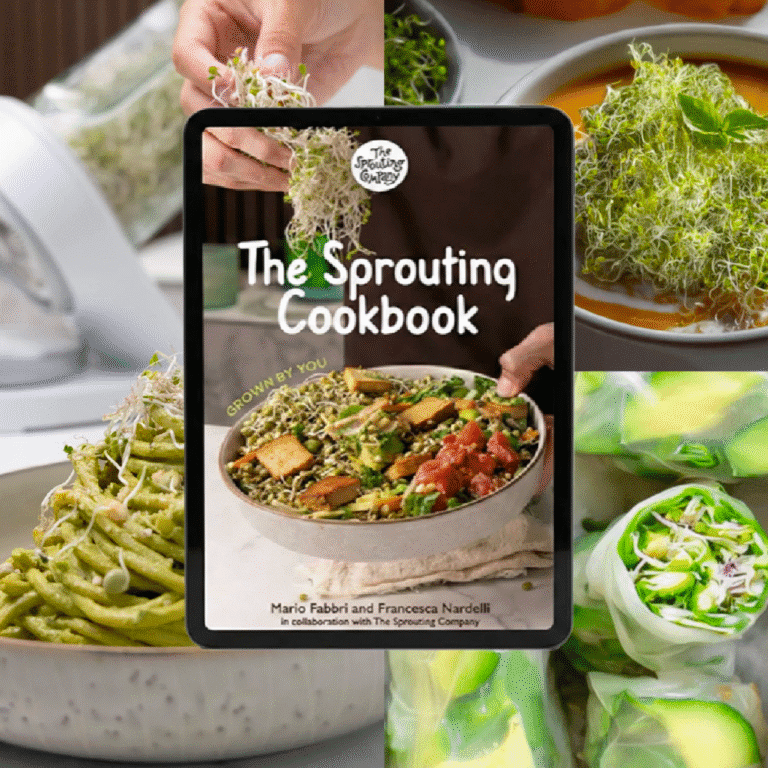
The Sprouting Cookbook
Packed with 100+ fresh, plant-forward recipes that turn sprouts into everyday staples: smoothies, soups, bowls, sandwiches, and more. A $24.99 value, yours free.
This week on Happier with Gretchen Rubin
PODCAST EPISODE: 573
Do You Avoid Failure & Rejection? Plus the Joy of a Same-Day Book

INTERVIEW
Sonja Lyubomirsky and Harry Reis
Sonja Lyubomirsky, Ph.D., is the bestselling author of The How of Happiness and The Myths of Happiness. Harry Reis, Ph.D., is a leading researcher on close relationships, whose work has been featured by NPR’s Hidden Brain, Scientific American, Psychology Today, and the New York Times. Their new book, How to Feel Loved, is available now.
Q: Can you suggest something we might try to help ourselves to become happier, healthier, more productive, or more creative?
HARRY: There are so many empirically tested, research-backed methods for becoming incrementally happier. (My lab pioneered experimental happiness interventions in 1998!). One caveat, however, is not to expect major boosts in happiness but rather small increases in everyday moments. In my experience, people often engage in happiness-increasing practices because they get distracted and because they don’t find the small increments meaningful. But they work! You have to use them regularly to get the benefit. What are they? Keeping a gratitude journal; asking your partner “how was your day?” every day and really talking about it; small acts of kindness; meditation (even for 10 minutes); physical exercise; taking time during the day to really connect with your partner (and not late at night when everyone is exhausted); and so on.
SONJA: Furthermore, both longitudinal studies and experiments show that happiness (and happy moods) is associated with stronger physical health, greater longevity, less pain, faster recovery from illness and surgery, stronger immune systems, greater creativity and productivity (e.g., making more sales, persevering more, etc.).
My #1 happiness tip is as follows: If you could do one thing today to be happier, have a 15-minute conversation with someone, be it your mom, your neighbor, your roommate, or the barista at your coffee shop. However, make sure that the conversation isn’t “small talk.” Make it a meaningful conversation, where you’re both sharing something that reveals a deeper part of yourself, listening to each other intently, and showing genuine curiosity. Studies show that most people feel happier, lighter, and more connected after such a conversation.
Q: Do you have a Secret of Adulthood? A lesson you’ve learned from life the hard way; something you’d tell your younger self?
HARRY: Be patient. For so many things, I expected instant gratification and got discouraged when it didn’t pay off. But things do pay off over the long run, if you keep working at it.
The things that seem like disasters when they are happening often turn out to be opportunities in disguise. Approach misfortunes as a chance to try something different, develop a new skill, or move in a different direction, not as a calamity or a roadblock. The time-worn adage, “when life gives you lemons, make lemonade,” can help turn disappointments into blessings.
SONJA: Be compassionate and hold your judgment. The older I get (and the more of the research I read), the more compassion I have for people who do “bad” things or show negative traits. Most of us are doing the best we can, under limited resources and constraints. Often, when someone fails to live up to our expectations, it’s because they literally don’t have the capacity to do it.
One year, on New Year’s Eve, I was at a big dinner with about 10 friends, and I asked everyone to go around the table and answer the question, “What is the worst thing that happened to you this past year.” Then I asked, “What is the best thing that happened this year?”
Amazingly, for most people at the table, the answers were the same! A couple of individuals, for example, experienced heartbreaks, but it led them to new relationships or to being on their own, such that they are now happier than ever. One woman was laid off from her dream job at a Hollywood studio, but the experience led her to find a new job that’s more fulfilling.
Q: What simple habit boosts your happiness or energy?
HARRY: It may sound trite, but sleep and exercise really matter! Also, simply chatting with someone, even briefly (whether a good friend or a stranger), on average, boosts our mood a LOT. So, if I were to give one tip for someone to be happier today, it would be—go and have a 15-minute conversation with someone, and don’t make it about small talk.
Try to do something, even if it is a small something, that gives you pleasure every day. Break difficult tasks that feel overwhelming into smaller bite-sized pieces—a little progress every day will get the job done. Make sure to set aside time to socialize with people you care about—and do it in person. And be sure to get enough sleep!
SONJA: I love all of Harry’s suggestions! I’ll reiterate that anything that I do that helps me connect with a friend or someone I like is what makes me happy. Meeting in person is wonderful, but it’s not always possible, so I love exchanging voice (audio) notes with my friends. Research shows that voice is the most humanizing modality, and I find it incredibly meaningful and special.
Q: Is there a particular motto that you’ve found very helpful?
HARRY: Beware of what you ask for, or you might get it. (That is, only ask for the things that really matter.)
SONJA: My favorite quote of all time is William James’ “Experience is what I agree to attend to.” This quote is really mind-blowing when you think about it. Let’s say you have back pain, or you fought with your spouse last night, or you’re about to go on vacation in Europe. If you’re not directing your attention on those things—if you’re not actually thinking about them—then they are not part of your experience. So, one could argue that a powerful key to happiness is redirection of attention. What you attend to is your experience. What you attend to is your life. And, most important, it’s under your control.
Q: Has a book ever changed your life? If so, which one and why?
HARRY: Why Am I Afraid to Tell You Who I Am? This slender book, written by John Powell and published in 1969, explains why it is so important to be open with other people—not only for building relationships but for helping you understand who you are and what makes you happy. When I first read it, it opened my eyes to a new way of connecting with other people that immeasurably improved my life.
SONJA: “Changed my life” might be too strong, but these books had huge impacts on me:
The Seven Principles for Making Marriage Work by John Gottman. Brilliant advice for anyone who has ever been in a romantic relationship. I give this to people as an engagement gift!
Come As You Are by Emily Nagoski. About women’s sexuality. I thought I know a lot but it turns out I didn’t. Any woman—or anyone who has sex with women—should read this book! I’ve given it out to many friends.
Good Calories, Bad Calories by Gary Taubes and Outlive by Peter Attia. Changed my everyday life—how I work out and how I eat.
Far From the Tree by Andrew Solomon. Brilliant book.
Other favorite books!
Guns, Germs, and Steel by Jared Diamond and Master of the Senate by Robert Caro. I learned more from each page of either book than I usually learn from one entire article in my field.
The Fitzgeralds and the Kennedys by Doris Kearns Goodwin. Fascinating biography of a fascinating family, with wonder and tragedy intertwined.
The Nurture Assumption by Judith Harris and Selfish Reasons to Have More Kids by Bryan Caplan. Both upend much of psychological science research.
Overdiagnosed by H. Gilbert Welch. Changed how I think about healthcare.
Drug Use for Grownups by Carl Hart. Changed how I think about recreational drugs.
Fiction: Anything by Elizabeth Strout, Jonathan Franzen, Curtis Sittenfeld, and Jane Austen
Nonfiction: Anything by Malcolm Gladwell, Sam Harris, Michael Lewis, Yuval Noah Harari, and Robert Caro.

You signed up to receive this newsletter at gretchenrubin.com