
Have you ever felt, toward the end of a summer, that you wished you’d done more with the season?
The writer Robertson Davies, put it well:
“Every man makes his own summer. The season has no character of its own, unless one is a farmer with a professional concern for the weather. Circumstances have not allowed me to make a good summer for myself this year…My summer has been overcast by my own heaviness of spirit. I have not had any adventures, and adventures are what make a summer.”
In other words, it’s up to us to make the most out of summer. A little intention goes a long way: a theme, a list of things you want to read and do and try, a sense of what you want the season to feel like. People sometimes worry that planning ruins spontaneity, but in my experience the opposite is true. When you know what you’re hoping for, you recognize the opportunities when they appear.
Here are some ways to design your summer.
Choose a theme
One of my favorite Design Your Year tools the one-word theme—a word that captures what you want out of the year. Your word can be anything meaningful to you: adventure, slow, family, bubbles, wiggle.
If you haven’t chosen a theme for the year, try choosing one for summer. If you do already have a theme, try giving it a summertime twist. When you’re making decisions about where to focus your time and energy, you ask yourself, “Does this choice reflect my theme?”
Make a bucket list
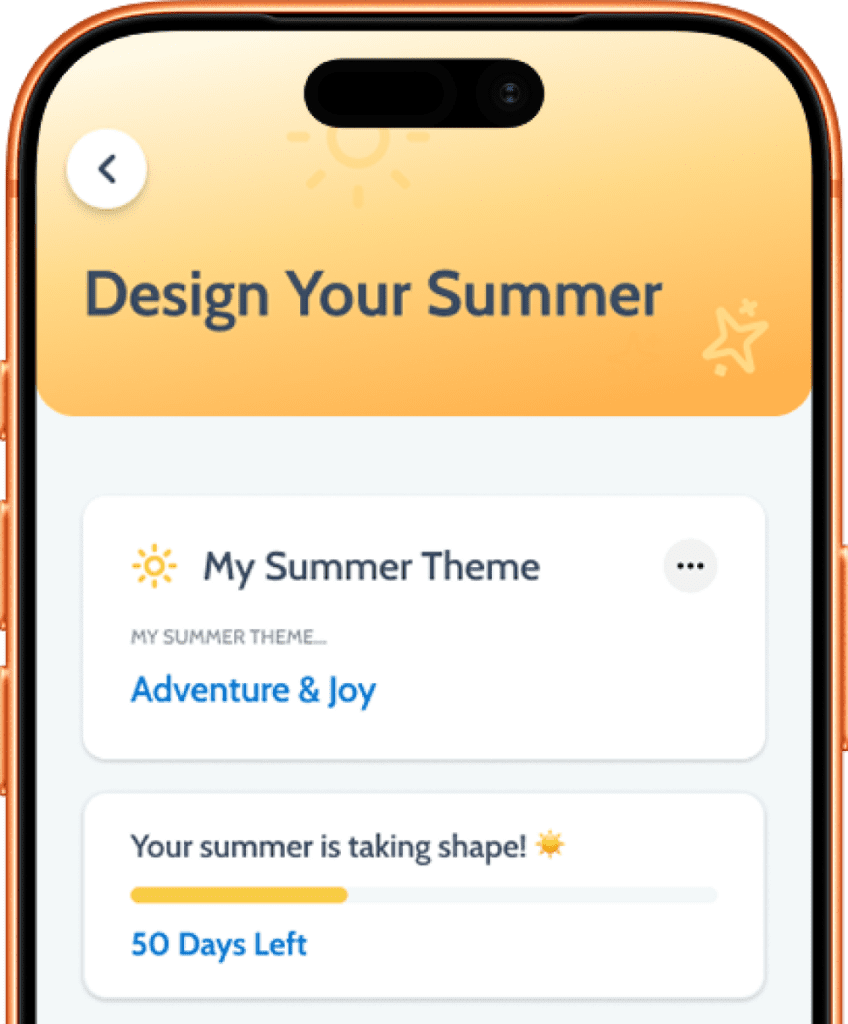
Planning ways to make your summer stand out doesn’t require a vacation or anything exotic. A list of specific things you want to do is enough. What do you want to read? Watch? Try? Record your list with the Design Your Summer worksheet or in the Happier app.
I like to build my summer reading list around a different theme each year. One year it was rereading—returning to books I’d loved. Another year it was tsundoku, the Japanese word for acquiring books and letting them pile up unread.
Pick a focus
Ask yourself: What do I want to do more of this summer? What do I want to do less of?
Answering those questions can point you toward an aim for the season. Getting outside, finishing a creative project, spending time with friends—whatever your aim, make it as specific as possible. “Go outside more” is hard to evaluate. Take a 20-minute walk before work on weekdays” is something you can hold yourself accountable to.
Keep in mind that summer can also present potential pitfalls and loopholes for maintaining good habits. Our schedules might change, we might go on vacation, our priorities for how we spend our time might change, we may be faced with temptation. The trick to staying on track? Decide ahead of time which habits you’d like to maintain, which you want to modify, and which you can take a break from (and give yourself a return date). You can also make planned exceptions—exceptions to a habit that you decide on ahead of time with specific limitations—to avoid feelings of deprivation or rigidity.
Leave room for play
For many of us, summer means good weather and more hours of sunlight, less structured schedules, time off from school or work. These weeks and months present an opportunity to break out of our normal routines and have adventures (whatever that means for us). Research shows that taking time each day to recharge boosts vitality, energy, and creativity—so take advantage of it while the season lasts.
Ready to Design a Happier Summer?
The Happier™ app offers a variety of tools that make designing your summer practical, fun, and concrete. If you’re not sure where to start, choose a prompt that resonates with you and build from there.
Free • iOS & Android