
I love proverbs, aphorisms, koans, paradoxes, and I especially love traditional teaching stories. There’s one particular story that I’ve been reflecting on lately; it comes in many versions, so I wrote a short version of my own. It’s called “The Villagers and the Crocodile: When we assume that we’re not next.” You can read or listen to it here.
Onward,

5 Things Making Me Happy
I’m gearing up to do a No-Spend February. As we discussed on the Happier podcast, my sister Elizabeth and I did this exercise in 2024, and it was so valuable that we decided to repeat it this year. Am I hurrying to buy things before the end of January? Yes, I am. But I’m also looking forward to the No-Spend period. If you’d like to consider joining us, here is a free worksheet to get you started.
Speaking of No-Spend February, if you’re curious to know what I learned the last time I did it, and what the “rules” were, you can read about it here.
I was deeply interested by the article “How are you aging? Try these simple tests.” It suggests several easy ways to evaluate your physical condition. On the down side, I can’t balance on one leg for ten seconds if my eyes are shut (though I can do it if my eyes are open), but now I’m feeling very vain about my ability to rise from the floor without support. Also, the article got me to recommit to working on my grip strength.
It’s extremely cold here in New York City, and the weather reminded me of the extraordinary town of Whittier, Alaska, where almost all of the 270-ish inhabitants live in one 14-story building. It was built as army barracks in 1957, and now everyone in town lives under one roof, along with a grocery store, school, health clinic, church, and police station.
I enjoyed the article “When writers talk, members listen”—”Amid a profusion of screenwriting podcasts, which ones did writer hosts name as their favorite?” I love listening to people talk shop, and I also love seeing a great review of Happier in Hollywood, the podcast my TV-writing sister, Elizabeth Craft, does with her writing partner Sarah Fain. So fun.
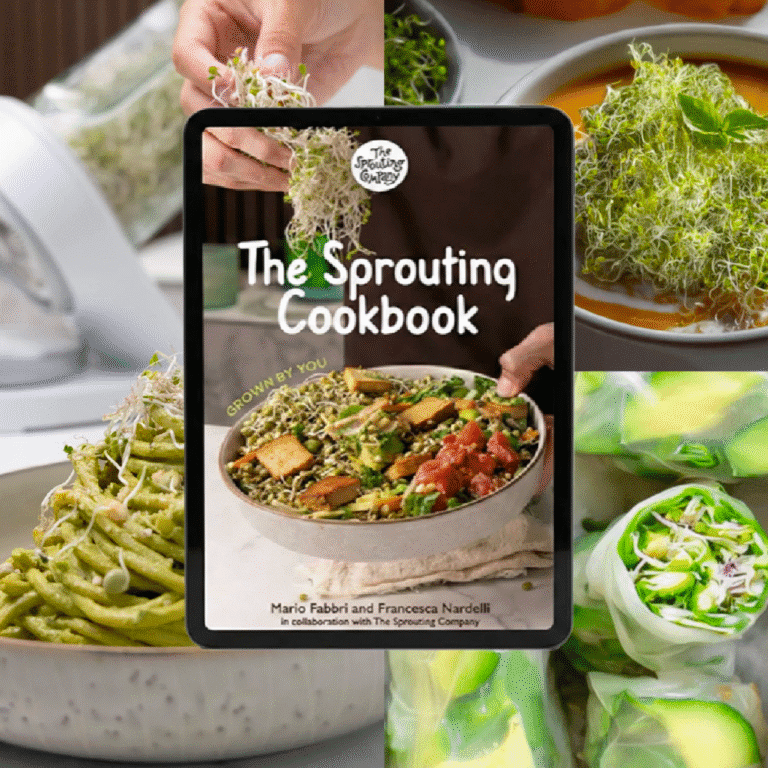
The Sprouting Cookbook
Packed with 100+ fresh, plant-forward recipes that turn sprouts into everyday staples: smoothies, soups, bowls, sandwiches, and more. A $24.99 value, yours free.
This week on Happier with Gretchen Rubin
PODCAST EPISODE: 571
Want to Join Us for a No-Spend February? Plus a Better Word for “Squats”

INTERVIEW
Jennifer Wallace
Jennifer Wallace is a bestselling author and an award-winning journalist whose career began at “60 Minutes.” Her new book—MATTERING: The Secret to a Life of Deep Connection and Purpose—shows how we can all strengthen the sense of mattering in our lives, and in the lives of others.
Q: Can you suggest something we might try to help ourselves to become happier, healthier, more productive, or more creative?
Try setting a few “personal policies” —and then keeping those promises to yourself.
“Personal policies,” as I call them, are simple, self-honoring rules that guide your decisions and actions. On the surface, they offer a kinder, clearer way of saying no, as in: “I don’t take work calls on Saturdays because that’s time with my family.” But on a deeper level, they send the signal that you and your needs matter.
Personal policies help you clarify what’s important to you and how to protect it. They also buffer against the resentment and burnout that come from saying yes when you should have said no. For example, I know a teacher who has a personal policy of leaving school by 4:45 pm every day so she can go to the gym. She will not sacrifice that one grounding policy. She told me that keeping that boundary has made her a better teacher and a more present parent because it reminds her daily that her own life matters, too.
When you keep a personal policy, you’re practicing mattering to yourself in real time. You’re telling your nervous system, your calendar, and everyone around you: My needs count, too. Do that consistently, and you build a sturdier, more spacious life, where your energy is protected, your priorities are clear, and your well-being no longer comes last.
Q: Do you have a Secret of Adulthood? A lesson you’ve learned from life the hard way; something you’d tell your younger self?
I’d tell my younger self that the loneliness you feel during big adult transitions, such as moving to a new city, starting a new job, or losing someone you love, has nothing to do with failing at adulthood. Transitions tug at the roots of how we matter, often shifting our sense of identity and purpose. Even the most self-assured people can feel unmoored.
What I wish I’d understood sooner is that the way through that loneliness isn’t found by looking inward, but by forcing our self-focused lens outward. When you feel like you don’t matter, you’re often just one small act of usefulness away from feeling it again. The shift comes when you turn your attention to someone else and what they genuinely need. Here’s the formula I wish someone had handed me in my twenties:
Mattering = Finding a genuine need in your community + using your 3 Ts (time, talent, or treasure) to meet it
Again and again in my research, I’ve found that the fastest way to feel like you matter during a challenging transition is to remind someone else that they do.
Q: What simple habit boosts your happiness or energy?
Being a cornerman.
In boxing, a cornerman is the person in your corner, invested in your success and cheering you on through setbacks. We all know the power of having a cornerman. What I’m talking about here is the transformative power of being one—a radical idea in an America shaped by rugged individualism, relentless self-promotion, and the myth of self-made success. At a time when we are constantly urged to optimize ourselves, the invitation to invest in someone else’s success and growth can feel, well, revolutionary.
Psychologists have a name for this kind of investment—ego extension, or when someone else’s growth becomes part of our sense of self. Their success becomes our success, and even a part of our identity. When that happens, we transcend the narrow borders of self-interest. We extend beyond ourselves.
Other cultures have long recognized this self-transcending role. In Celtic tradition, this person is referred to as an anam cara, meaning a soul friend. In Africa, the term “ubuntu” means “I am because we are.” In Buddhism, mudita refers to the joy we feel in another’s joy.
Neuroscience confirms we are wired for this kind of investment. Studies show that witnessing someone else’s growth lights up the same reward centers in our brain as if it were our own. These moments shape us and help us grow. What I’ve found is that by helping someone else become more of who they’re meant to be, we become more of who we’re meant to be, too.
Q: Is there a particular motto that you’ve found very helpful?
My favorite is a simple take on the Jesuit motto: “Not better than others, but better for others.”
In our hyper-individualistic culture, it’s so easy to get caught in a cycle of achievement, comparison, and self-promotion. That mindset pulls our attention inward and makes other people feel like competition. But this motto flips the lens. When I focus on being better for others, my world gets bigger and my energy shifts from proving myself to contributing something meaningful. It’s one of the simplest, most reliable ways I know to find purpose and joy in our everyday lives.
Q: Has a piece of writing ever changed your life? If so, which one and why?
Sociologist Morris Rosenberg’s early writing on mattering changed the course of my life. He argued that well-being requires more than feeling good about ourselves; it requires feeling like we matter, feeling valued by others, and believing we add value in return. When I first heard about the concept of mattering, I remember thinking, “Mattering is what life is all about.” It put language to something I had been circling for years but hadn’t been able to name.
That insight became the spark for what turned into my seven-year journey of researching and writing my new book
Mattering.
Learning about mattering has reshaped the way I parent, work, and build community. Rosenberg handed me a new lens through which I now see the world.

You signed up to receive this newsletter at gretchenrubin.com