One challenge I didn’t anticipate from reading Virginia Woolf’s Diaries is now I want to re-read all her novels. I love to re-read, but if I spend too much time re-reading, I’ll never read anything new. Perhaps, however, there can never be too much re-reading of Virginia Woolf. On March 17, 1930, Woolf wrote, of The Waves, “At any rate, I have taken my fence.” I will take my fence of reading The Waves again. “Rhoda has rocked her ships to shore. Whether they have anchored, whether they have foundered, she cares no longer.”
Onward,
![]()
5 Things Making Me Happy
As noted, I love to read, and I’m always looking for ways to discover great new books. Also, I’m always interested to learn what other people enjoy, even if it’s not something that I’d want to read myself. For instance, I don’t have a taste for mysteries or thrillers, but will occasionally read one just to know what the fuss is about. I was very intrigued to read this piece: “25 books that readers say are absolutely perfect from start to finish.” I’ve read 22 of the 25 (though I must say, I don’t agree that all of those are “perfect”). Now I have some titles to add to my TBR pile.
I love frameworks and categories, so I was delighted when my friend Delia Lloyd (follow her great Substack, Mature Content) pointed me to the article “Four types of thinkers have been identified. Which one are you?” Categories: the worriers; the domestics; the bodily thinkers; the work-hard, play-hards. Hmmm….
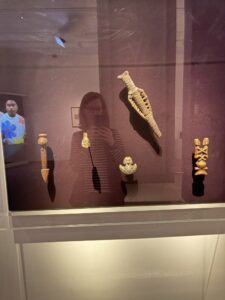
The Met has an exhibit, Musical Bodies, that explores the relationship between the human body and musical instruments. This display of whistles got me to thinking—whistles are great! I love whistles. Come on, people, we could do a lot more with whistles, they are so easy and fun! Someone with ingenuity should come up with a new exciting kind of whistle.
I got a big kick out of seeing my sister Elizabeth (also co-host of the Happier podcast) quoted in this article, “This Is Your Home on GLP-1s.” As a type-1 diabetic, Elizabeth has seen a huge gain in her health from this medication, but I hadn’t thought about how it might change her relationship to her surroundings. (Or her snoring.)
Every year, I remind myself that “September is the other January;” it’s a good time to set a new goal, or recommit to a goal that needs a bit of a boost. In this article, I explore why and how September is particularly auspicious.
This week on Happier with Gretchen Rubin
PODCAST EPISODE: 600
Listeners share the insights and suggestions that have resonated with them most over the past 600 episodes.
INTERVIEW
Stephanie Wittels Wachs
Stephanie Wittels Wachs is cofounder and CEO of Lemonada Media, an award-winning podcast network on a mission to “make life suck less.” She created and hosts Last Day, Lemonada’s Webby, Gracie, and Third Coast Award–winning flagship show. Its first season focused on the opioid crisis, which took the life of her brother, writer-producer-comedian Harris Wittels (Parks and Recreation, Master of None).
Wittels Wachs is also the author of the bestselling memoir Everything Is Horrible and Wonderful: A Tragicomic Memoir of Genius, Heroin, Love, and Loss, which Kirkus Reviews hailed as a “a powerful debut.” Wittels Wachs serves as an executive producer across Lemonada’s slate of chart-topping podcasts, including Wiser Than Me with Julia Louis-Dreyfus, which was named Apple’s Best Podcast of the Year. She lives on California’s central coast with her husband, two kids, two dogs, and an ungodly amount of houseplants.
Her new book, Last Day: How to Stop Losing Our Loved Ones to the Opioid Crisis is available now.
Q: Can you suggest something we might try to help ourselves to become happier, healthier, more productive, or more creative?
The older I get and the more strapped for time I seem to be, I find that engaging in simple activities, consistently, is the way to go. Carving out time for dinner with your girlfriends, going on a 30-minute walk, beholding a body of water (preferably, an ocean but whatever you have nearby will do), planting something in soil, playing fetch with the dogs, sitting by a fire pit, playing a game of Scrabble. The little things tend to fill up the bucket the most.
Q: Do you have a Secret of Adulthood? A lesson you’ve learned from life the hard way; something you’d tell your younger self?
My Secret of Adulthood is that very little actually matters. Here’s what I mean: When someone you love suddenly drops dead, your entire life recalibrates in an instant. And all the little, insignificant things you used to worry about are completely wiped off the board and a heavy nothingness takes their place. In the early days of grief, the sense that nothing mattered swallowed me like quicksand. I sat in it, drained and empty, for months.
But eventually, around the one-year anniversary of my brother’s death, it hit me: Nothing matters! How utterly freeing! I can do anything. I can be anything. We’re here for a blip so why not just go for it? Design the life you want and live it to the fullest. Mary Oliver said it better in her poem The Summer Day: “Tell me, what is it you plan to do with your one wild and precious life?”
Q: What simple habit boosts your happiness or energy?
Call me basic, but I find that a consistent manicure every few weeks brings me a tremendous amount of happiness. I just love a bold nail! And if I’m going to be tapping away on a keyboard for hours and hours every day, I might as well do so with fabulous nails.
Q: Is there a particular motto that you’ve found very helpful?
My dad used to always say, “The cemetery is full of indispensable people.” I’ve always loved the way it immediately puts everything in perspective. We can get so wrapped up in the minutia and the drama of our daily lives, and at the end of the day, we all end up in the same place. Our time here is very short in the grand scheme of things, and the world will keep spinning without us, which I find clarifying. What really matters and what doesn’t? It also instantly grounds you in a sense of humility. You’re important, sure, but you’re not that important!
Q: Has a book ever changed your life? If so, which one and why?
Yes! The Year of Magical Thinking by Joan Didion. I mean, is there anything more isolating than acute grief? In the aftermath of my brother’s death, it truly felt like I was the only person in the world who had ever felt such an intense degree of pain and sorrow. Then I read Joan Didion’s book, written after the sudden death of her husband, and her writing somehow reconnected me to the earth.
She said things like, “Grief has no distance. Grief comes in waves, paroxysms, sudden apprehensions that weaken the knees and blind the eyes and obliterate the dailiness of life.” With every sentence, I felt more and more seen. It was also the most gorgeous, lyrical, poetic thing I’d ever read, and it encouraged me to start recording my own grieving process.
In the months after my brother’s death, I wrote and wrote and wrote. All of that writing turned into an essay I published on Medium that went viral. It came across the desk of a literary agent, who reached out and asked if I wanted to turn it into a book. At the time, I couldn’t even brush my teeth, but she was like, “Look, the writing seems to be therapeutic, so if, at the end of a year, you have something resembling a book, I can help you sell it. And if not, we can go our separate ways.” This was exactly the right amount of pressure.
Anyway, at the end of the year, I did have a book that was eventually published, and this was really the beginning of a new chapter for me as a professional storyteller, which I’ve continued in my work as co-founder and now CEO of Lemonada Media, home to Happier with Gretchen Rubin.
You signed up to receive this newsletter at gretchenrubin.com